Barstow

Barstow's population has now reached about 22,850 residents with a trade area of approximately 60,000 people. The city area is about 33 square miles with housing priced well below Los Angeles, Orange and San Diego counties.
The City of Barstow and the Victor Valley are both located in the Inland Empire. The City of Barstow is mid-point between Los Angeles and Las Vegas, lying just 30 miles north of Victorville. Conveniently located at the intersection of Interstates 15 and 40, as well as Highways 58 and 247, Barstow provides optimal access to Southern California as well as Arizona, Nevada, and Utah.
Click here to see city of Barstow virtual tour!
According to the Barstow Desert Dispatch, May 14, 2009, Barstow’s newest hotel, the Country Inn & Suites recently opened. The 92-room hotel informally opened its doors on Lenwood Road by the Barstow Factory Outlet Centers on April 24, and is gearing up for a May 28 grand opening.
Hotel Manager, Angel, who has 15 years of experience in the hotel industry and has managed two other Country Inns in the past, said she wants to see more cooperation between Barstow’s hotels and restaurants and more emphasis on bringing people to town. She envisions more outdoor recreation, from mountain biking to extreme sports; and outdoor festivals similar to the Coachella Valley Music and Arts Festival held each year in Indio.
Despite opening in a less-than-ideal economy, Angel said that after less than a month, the Country Inn is already operating at 40 or 50 percent occupancy in its 92 rooms. The hotel has found a niche with military contractors, she said. Among other amenities, the hotel offers an indoor pool and whirlpool, as well as three suites with private whirlpools, and three extended-stay suites with full kitchen facilities.
Sgt. Bradley Winget, who was staying in the Country Inn with a group preparing to bring a unit of soldiers back from Fort Irwin to Hawaii, said he was so pleased with the hospitality that he convinced several civilian government employees to relocate there from other hotels.
According to the Barstow Desert Dispatch, May 8, 2009, the California Energy Commission is beginning to review a large-scale solar project proposed for construction in the desert east of Barstow. The Stirling Energy Systems Solar One project, if completed, would generate a projected 850 megawatts of electricity to power about 600,000 homes per year in Southern California at peak hours, through about 34,000 solar dishes. Southern California Edison has agreed to purchase the output from the plant, according to information provided by Stirling.
The project would create 300 to 700 jobs during construction and 100 to 125 permanent jobs once completed, said Janette Coates, Communications Manager for Tessera Solar, Stirling’s project development company. The facility would use a technology known as the SunCatcher system developed by Stirling, involving curved mirrors that collect and concentrate solar energy into a specially designed engine, with each dish generating about 25,000 watts of power.
The energy commission review process is typically a year long but could take longer, since the commission is currently inundated with three times the normal volume of energy project applications, spokesman Percy Della said.
According to the Barstow Desert Dispatch, August 29, 2008, near the Lenwood Road exit on Interstate 15 and surrounded on all sides by truck stops and truck washes for rigs with 18 wheels and trailers full or cargo, Local businessman, Komski wants his fuel stop to appeal to trucks that jump off sand dunes and kick up dirt as they rip through race tracks in the desert. Quads, motorcycles, sand rails and anything else fueled by adrenaline are welcomed, too.” We’re not a truck stop,” Komski said. “We’re really trying to appeal to the action sports crowd.”
Extreme Convenience, as Komski called the store, will combine
essentials of a gas station convenience store — snacks, coffee, hot food — with the needs of those who like to tear through the desert for a weekend. The store partnered with Monster Energy, an energy drink company and omnipresent sponsor and presence in the off-road community, Komski said, and will sell all of Monster’s drink products and gear as well. In addition to Monster-logoed T-shirts and caps, Komski plans to sell off-road specific gear, helmets, gloves, goggles and more. The big draw, Komski hopes, will be a dedicated gas tank for high-performance C12 racing fuel.
It is an ambitious plan for the old Arco AM/PM on the corner Lenwood Road and Commerce Parkway. The store and gas station has been shut down for four years, Komski said, and after about $2 million, should look nothing like it once did when it reopens on Oct. 1. A designer from Monster has worked with Komski to mimic Monster’s look. A banner featuring Monster-sponsored athletes will run around top of the inside walls. The store’s cabinets and counters will be wrapped in Monster’s so-called digital camouflage, the same design as their Assault energy drink can.
According to the Barstow Desert Dispatch, August 1, 2008, the Barstow Planning Commission approved a new development in west Barstow on a few conditions — 46 of them to be exact. Monday’s go-ahead from the Planning Commission for a 219-lot housing development along Jasper Road north of Citrine Road came with a list of additional requirements and mitigation measures ranging from noise to raven control. Both the applicant, Steve Carter, a real estate agent from Las Vegas, and the commission agreed to the conditions and the development was unanimously approved.
Many of the conditions attached to the development plan are ways to decrease the noise surrounding the proposed houses. Railroad tracks and State Highway 58 border the development on two sides. One condition asks the developer to establish a noise complaint response program; others call for solid-core wooden exterior doors, double-paned glass and notices to prospective buyers of the noise concerns. Some conditions also protect plant and animal species found in the nearby Mojave River.
Mike Massimini, the city’s associate planner, called the development a “well-scoped project,” that took into account the many peculiarities of the site. One condition calls for the ground, which is mostly loose sand, to be compacted to make a more stable base.
Despite the housing market’s current slump, Carter told the commission that he still intends to build on the land. He expects construction to start in May, 2009. “We do not plan on letting grass grow under our feet,” Carter said. “We do feel that we have a subdivision here that will provide Barstow with a very valuable product and that’s a first time home buyer product.”
The development will be built inside the boundaries of the recent West Barstow Annexation. The annexation, which became official on June 16, adds 144 acres of land near Agate and Jaspers roads to the city. The annexation was originally requested by the developing firm, Pacific Holt, in 2005. The City Council vote 4-1 to accept the proposal.
According to the Barstow Desert Dispatch, June 25, 2008, San Bernardino County has committed to building a new fire station on Interstate 40 between Barstow and Needles. In the county’s 2008-2009-budget, approved by the Board of County Supervisors on Tuesday, $300,000 was earmarked for design work on the new station. Andy Silva, a spokesman with 1st District Supervisor Brad Mitzelfelt’s office, said the exact location has not been determined, but Ludlow and Amboy have both been floated as possible sites. The size and other specifications of the station will be worked out in the design phase.” It’s definitely going to happen, and that’s good news for everyone who travels on Highway 40 and surrounding areas,” he said.
Wert said the county will begin the project this fiscal year. By the end of the summer, the county will start receiving bids for the design work, and construction could begin in the next year, Wert said. The county’s contingency fund, reserve fund, and capital improvements fund are all possible sources of funding for the project.
According to the Barstow Desert Dispatch, June 10, 2008, excitement for an influx of jobs to the area, the Barstow Planning Commission unanimously moved the proposed Wal-Mart Distribution Center on Lenwood Road Monday night to the City Council last night.” This is a great contribution to the community,” said Planning Commissioner Carmen Hernandez at the meeting. “It's been a long, long time since we had jobs come in that amount.” The center would bring about 500 new jobs to area during the first years of operation and between 800 and 900 jobs about two years later, said John Mendez, a spokesman for Wal-Mart who is working on the Barstow project. Mendez said the jobs would be high quality with an average hourly rate in the high teens.
Other commissioners and some in attendance at the meeting agreed with Hernandez, lauding the jobs that would come with the distribution center. During a public hearing held about the center, no one spoke against it. Jeff Eason Sr., president of the Barstow Senior Center, said Barstow needed such a center to help with unemployment.
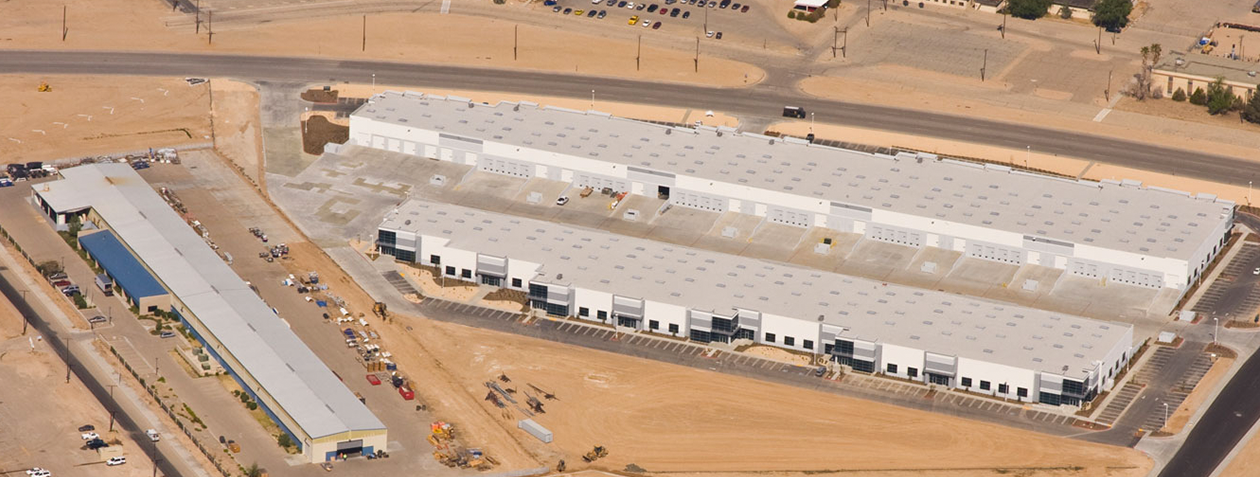
The more than 1 million square foot distribution center, to be built along Lenwood Road north of Jasper Road and southeast of the High Desert Estates housing area, will serve as a warehouse for both dry and frozen goods. The project will go to City Council for final approval on July 7, said Morrow. Morrow said Wal-Mart will still have to weather an appeal process for the Environmental Impact Report and a permitting process.
Mendez said Wal-Mart would like to start construction as early as this fall and hopes to open the distribution center in 2009. “We’re pleased that the Planning Commission took the first step,” Mendez said. “Now we look forward to going to the City Council.
According to the Business Press, April 27, 2008, the Waterman Junction, a SunCal Cos. proposed master-planned community to be built south of Barstow, is expected to provide about 25,000 homes in the next 20 to 30 years. A new recreational lake, parks, trails, a golf course, local shopping and jobs are all part of the plan," said Peter Johnson, San Bernardino County Division president of Irvine-based SunCal.
"This is going to change the face of Barstow forever," said Barstow Public Information Officer John Rader. "The city's population is 24,000 now. At (Waterman Junction) build out, we could be at a population of 75,000."SunCal chose the 750-acre along Interstate 15 between Stoddard Mountain and Lenwood Roads, because of the availability of transportation, the current shortage of housing in the Barstow area and the opportunity to develop a large-scale project, Johnson said.
Scheduled to break ground in 2010, Waterman Junction was designed with "smart-planning principles," Johnson said. Designers focused on creating a community that utilizes cutting-edge technology, causes minimal impact, maximizes resources and preserves open space.
Along with the community's mix of small businesses will be a series of Interstate-15-fronting retail outlets, Rader said. The Lake District is expected to feature a series of waterfront stores and restaurants and an industrial and business park is planned. Because of increased traffic along the Interstate 15 corridor, the Waterman Junction project will make infrastructure and roadway improvements feasible.
Barstow officials have yet to file an official annexation application for the project area that is now located in the city's sphere of influence, Rader said. After the annexation, a series of environmental and pre-development requirements must be met at the county level.
Barstow needs 4,479 housing units in the next eight years as the High Desert takes a more prominent role in industry and logistics, said Joe Carreras, program manager of housing and community planning for the Southern California Association of Governments in Los Angeles.
According to the Barstow Desert Dispatch, May 5, 2008, a group of real estate investors has bought land surrounding the Barstow County Club. About 259 acres of land south and west of the golf course, which is off of Country Club Road in west Barstow, was bought by a group of investors. A local realtor said the investors intend to build a mix of homes on the land, hoping to cater to employees at the proposed Barstow Industrial Park and the expanded Southern California Logistics Airport in Victorville. He said the investors expect a majority of the people moving into the homes will either be commuters to jobs down the hill or Barstow residents looking to move up.” That area could really use houses,” realtor, Brown said. “This western area in the city limits, there’s almost no housing there.”
The project is part of a broader Sun Valley development plan, Brown said, and is north of the proposed SunCal Waterman Junction development. It is too early in the process to know how many homes will be built on the land, but Brown said about 3,000 to 4,000 new homes could be built in the area. The homes could be ready in three to five years, he said. Brown did not outline any plans for the golf course. Brown said the investment group recently bought the land from a group of individuals. Despite a skidding national housing market, Brown said the market in Barstow is still attractive to investors and developers.” Barstow has a healthy population and they have a healthy workforce,” Brown said.

Barstow gets high marks when it comes to the railroads. Barstow was the logical location for a facility that could combine and classify freight traffic for all directions. And Santa Fe Railroad has invested more than 50 million dollars to prove it. The Burlington Northern Santa Fe and Union Pacific Railroad Classification Yard is a sophisticated and computerized facility directing major rail transportation throughout the United States. In addition, Amtrak offers passenger service to Los Angeles and Chicago by way of Las Vegas. Barstow has a reputation as being a major trucking capital. Yellow Freight Systems operates a 200-door freight distribution center at Interstate 15 and Lenwood Road. The intersecting highways and freeways have been a big plus for trucking. Interstate 15 connects Los Angeles with Las Vegas and continues northerly to Salt Lake City, Utah. Interstate 15 is undergoing a major expansion.
Caltrans is improving the 29-mile stretch between Barstow and Victorville along I-15 and will add a third lane at a cost of $178 million. This will result in increased freeway capacity, less congestion and improved freeway operation. Barstow is well positioned to play an important role in the growth of the Southern California Logistics Airport, offering important rail and trucking operations in close proximity to the Victor Valley.
Also, from Barstow to the Nevada State Line, there are plans for further improvements to I-15. Caltrans has plans for improving I-40 by reconstructing 22 miles of highway. There are also plans for the widening of Highway 58 that runs from Barstow though Kramer corners at the Junction of Highway 395 and Highway 58. Barstow also has its own airport, the Barstow-Daggett Airport with 5500 ft. and 6400 ft. Runways, providing service for executive and charter aircraft.
According to the Barstow Desert Dispatch, March 11, 2006, BNSF Railway announced Friday a multi-million dollar project to expand its tracks in Barstow to ease cargo flow through the area. The company has two tracks running through the city now. Officials are planning a third main track stretching nine miles at a cost of $16 million. “What that does is allows for operational efficiencies and expedited handling of trains going through Barstow without stopping,’’ said Lena Kent, spokeswoman for BNSF Railway. Work on track construction is expected to begin later this year and should be completed by mid-2008. Barstow Mayor Lawrence Dale hailed the project as a good sign. The BNSF rail lines “are quite congestive at the present time,’’ Dale said. “I would expect that their plans for this track between Barstow and Daggett are just a start. I would expect a third main line from San Bernardino to and through Barstow in the next several years.’’
BNSF’S other rail enhancement and maintenance projects this year include a $9 million expansion of the parking structure at the San Bernardino inter modal facility and a $26 million expansion of Los Angeles’ inter modal facility’s parking and stacking capacity. BNSF also plans to buy 310 low-emission locomotives for another $600 million. The company is eyeing Barstow, Victorville and Bakersfield as possible locations for such a facility, meant to help move along cargo coming through ports of Los Angeles and Long Beach. About 60 percent of the cargo arriving through the ports is picked up by BNSF and Union Pacific Railway, while the rest either stays in the area or is loaded onto trucks, Kent said.

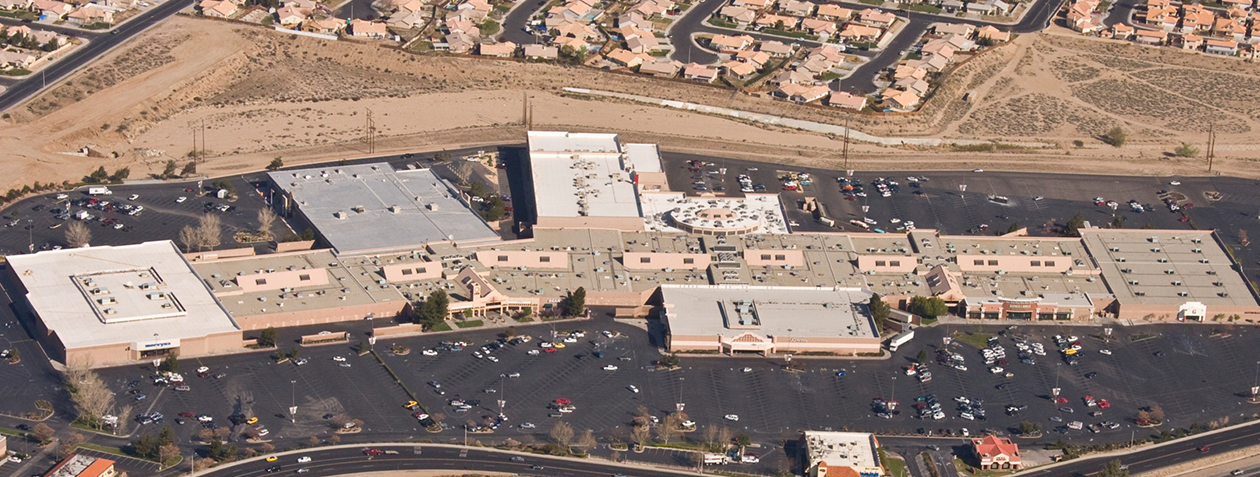
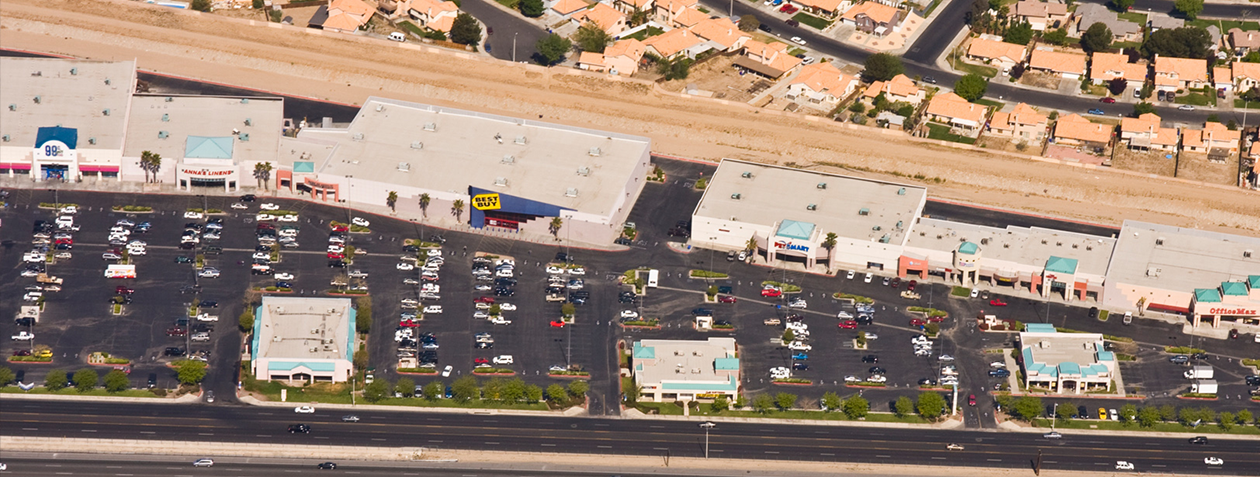
The Barstow Area is especially well known for the Factory Outlet Malls in the Lenwood area of Barstow. There are over 120 stores, including Polo, Ralph Lauren, Gap, Calvin Klein, Donna Karan, and Coach. The Barstow Factory Outlets are owned and operated by the New Plan Excel Realty Trust. In addition, there is the Tanger Factory Outlet at I-15 at Lenwood Rd. that has an additional 24 stores, including Liz Claiborne, Reebok, Van Heusen, Mikasa, and Samsonite Luggage.
These stores have become very popular, because shoppers can purchase famous designer brands of first-quality merchandise at direct-from-manufacturer prices in an atmosphere that is shaded by trees and decorative vines in a park-like setting.
According to the Victorville Daily Press, January 4, 2007, the Tanger Outlet Center wants to add almost 60 percent to their facilities, which represents an increase from 110,000 to 175,000 square feet. They currently have 24 stores, and no vacancies. Carrie Warren from Tanger’s corporate office in Greensboro, N.C. said they expect to add around 15 stores depending on the size of each space. Stores average between 3,500 and 4,000 square feet in size.” It’s time to expand and see some growth,” Warren said. “The location has done well.”
Though Tanger has yet to release information on which stores will be moving into the new spaces, Warren said they already have stores lined up to move in.” We’re not ready to share the store information, but Tanger doesn’t build on speculation,” said Warren. “We’ve been in business for 26 years and we only build if we have over 50 percent leased. We have a great line up for the stores.” The expansion would be built south of the current location, near the Reebok store located in the Tanger Outlets. Warren doesn’t expect any obstacles to the expansion plan and believes it would be good for them and the community. The expansion is subject to Barstow approval.
Warren cites the history of the outlets and the growth of Barstow and Lenwood as factors in the decision to expand the facilities. She also said the Barstow location is undersized compared to the majority of their 35 nationwide outlets, which average 250,000 square feet.” That location has been a success for the past 11 years,” Warren said. “The Barstow area, especially around the I-15, continues to grow, so we expect good traffic. Our outlets range from 80,000 to 1 million square feet, but most are on the larger side.”
According to the Barstow Desert Dispatch, February 26, 2008, seven new stores in the Tanger Outlets near Lenwood have opened or will open in the coming weeks, nearly completing the center’s 65,000 square-foot expansion. The expansion means more shopping choices and employment opportunities for local residents. “Who wants to go Down the Hill to go shopping?” he said. “It’s another reason to stop in Barstow. People going to Vegas can stop for fast food and gas. People coming back can stop to go shopping.”
Retailers Gymboree, Ann Talyor and Banana Republic opened late last week, said Jennifer Rodriguez, General Manager of the center. They will be joined by Calvin Klein, Aeropostale, Michael Kors and American Eagle Outfitters in the coming weeks. Coach moved from its old location to a newer, bigger storefront. Tommy Hilfiger will also move into the expanded part. “These are the brand names that customers are requesting,” she said.
Rodriguez said she expects the entire outlet center to be filled by May. The company is still negotiating with retailers to occupy the remaining spaces. Once built, the company’s attention will turn to finding tenants for the six remaining parcels of land the company owns in the Lenwood area, Rodriguez said. She expects three of those parcels to be filled with restaurants.
According to the Barstow Desert Dispatch, September 28, 2005, the Barstow Planning Commission approved a measure that will bring hundreds of small Chinese-owned businesses to the Barstow Outlet Center, which could help to add new life to the Barstow Factory Outlets and the area east of I-15. In the near future, this would mean that from 200 to 500 small businesses from the city of Yiwu in central China would set up shop in about 200,000 square feet of unoccupied store space at the Barstow Outlet Center. The businesses expect to be operating by the Chinese New Year, or late January of 2006. The products on sale could include electronics, clothing, furniture, jewelry, toys and a range of other items, according to a report prepared by Scott Priester, Director of Barstow City Planning. The currently unoccupied space at the Mall would be set up as an open showroom and divided up into hundreds of booths. The planning commission measure would also allow these businesses to operate on a wholesale basis, but require that all warehouse space be kept off-site. Currently, this would mean that the businesses would ship their wholesale inventory directly from China.
The Chinese businesses have a similar, but a much larger building in Yiwu, China that accommodates 50,000 booths. "While we do not expect Barstow to become the U.S. version of Yiwu, China, there is an opportunity to create a unique shopping center in Barstow, which will attract many shoppers from (the) western U.S. City officials hope the new businesses may revitalize the outlet malls that have seen much competition from outlet malls in other communities.
According to the Barstow Dispatch, January 27, 2006, Rimrock Ranch was recently approved by the city of Barstow, and represents the largest housing development in Barstow in decades. The master planned community will include up to 1500 homes on a 564-acre site adjacent to Barstow Heights, which is close to the Barstow Community College. Plans call for lots ranging in size from 7200 square feet to one acre. Eleven acres of the Development would be set-aside for commercial projects, apartments, parks and hiking trails. Canaday is the Tustin-based Developer of Rimrock Ranch. The Company plans to build the 1500 homes over the next 10 years.
Rimrock Ranch is moving forward with the first three tracts of homes. The master planned community of Rimrock Ranch was approved for its first phase of three different building tracts, the first with 98 planned lots, the second with 104 planned lots, and the third for 105 lots. These homes represent the initial phase of a planned community of about 1500 new houses on the south side of Rimrock Road, about a mile west of Barstow Road.
The Development will eventually include other amenities such as a school and paths. Rimrock Ranch fills a specific void in the Barstow area for executive-style housing, citing a past Chamber of Commerce survey. According to Barstow city Officials these 1500 homes represent the first domino of more than 6000 homes that are currently in one development stage or another in Barstow.
The Mojave Water Agency's Pipeline Project gets its water from the California Aqueduct. The California Aqueduct, also known as the Feather River Project, was completed several years ago at a cost of 3.7 billion dollars. It gets its water from the Orville Dam near Sacramento. It's been estimated that the Feather River Project can bring enough water to service the water needs of 20 million Californians. Work on the Mojave Water Agency's $53 million pipeline project is on schedule, and the water-spreading basin in Lenwood is working as planned. The entire pipe is already in the ground along Community Boulevard and the next segment will take the pipeline up and around Barstow.
Work on the Mojave River Pipeline Project began in March 1997. The pipeline parallels the Mojave River and is designed to carry water as far as Newberry Springs from the California Aqueduct near Baldy Mesa. Water began flowing into the Lenwood water recharge basin on April 3, 1999. The Lenwood recharge site is roughly the halfway point of the project, which is scheduled to arrive in Newberry Springs by 2006.
According to the San Bernardino Sun, October 13, 2005, the 76-mile Mojave River Pipeline, linking the aqueduct south of Adelanto to Newberry Springs, is in its final phase of construction. "We expect to complete the pipeline by late December 2005, so water can start to flow in January," said Kirby Brill, General Manager of the Apple Valley-based Mojave Water Agency, which is building the line.
Santa Fe Railway's company payroll is $23.7 million. - United States Marine Corps Logistics Supply Base payroll $103.9 million annually.
- Contel Corporation's annual payroll is $30 million.
- Bendix's annual payroll is $13.2 million.
- Edward's Air Force Base economic impact estimated to be $2.2 billion. - Payroll is over $500 million.
- Fort Irwin Training Center- Army payroll $141 million.

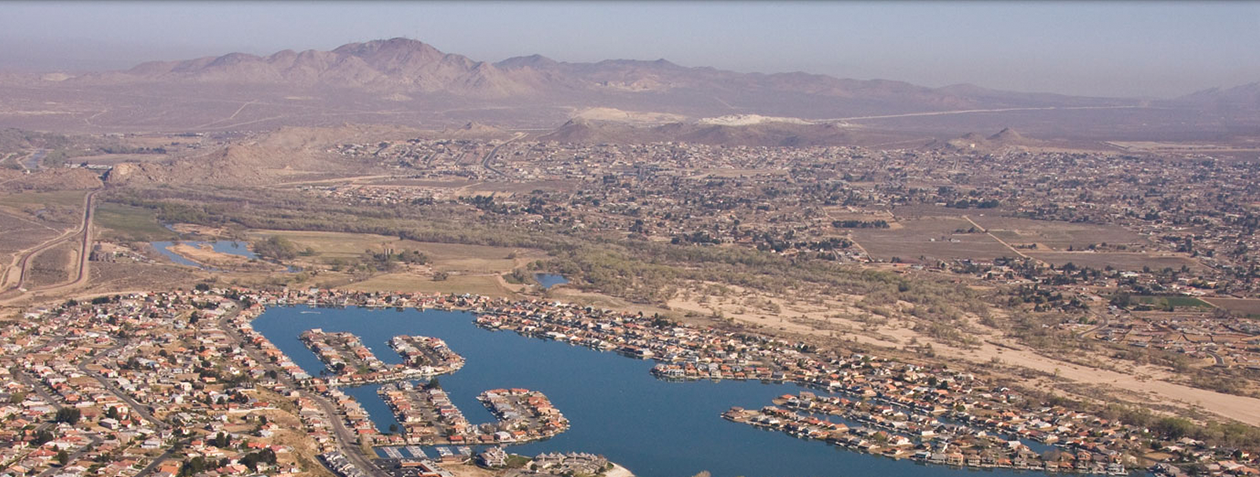
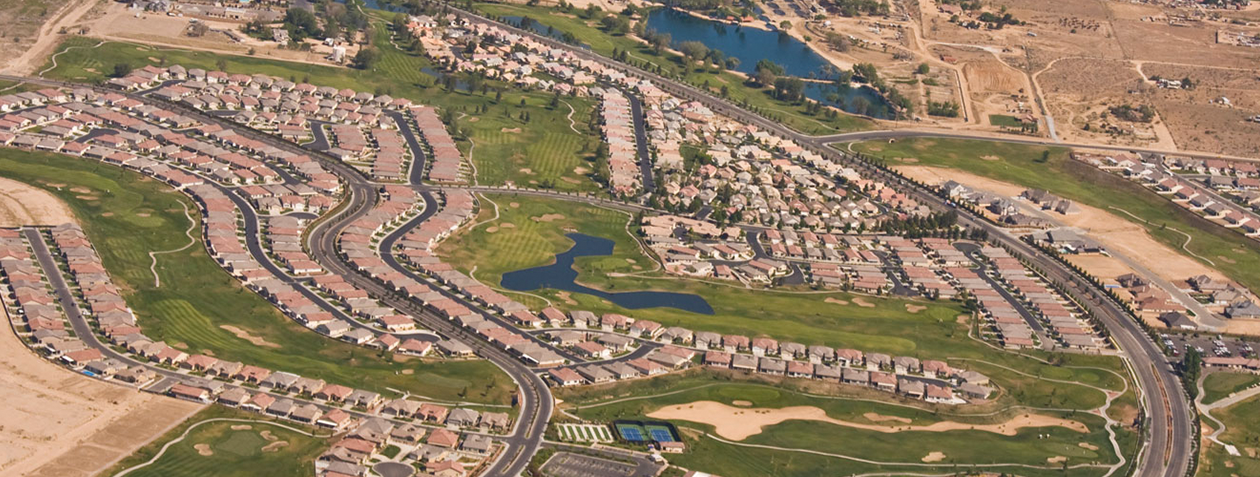
Situated to the south of Hinkley and Barstow and to the north of Victorville is the Town of Helendale. Helendale has the gorgeous Silver Lakes Development. Silver Lakes is a planned private lake community of 3000 home sites that are currently about half built out. Silver Lakes has two man made lakes. One being 112 acres for swimming and fishing and the other is 165 acres for boating activities. There is also a 27-hole PGA Robert Trent Jones Golf Course. Many beautiful homes have been built along the fingers of the lakes and along the fairways of the golf course. The homes in Silver Lakes are some of the most gorgeous ones in the High Desert. Silver Lakes also offers Horseback Riding - Sailing - Boating - Fishing – Racquetball - Lighted Tennis Courts - Shopping and 24 Hour Security. There is also the Inn at Silver Lakes, which is a 50-room hotel.
According to the San Bernardino Sun, February 11, 2006, civic leaders and developers envision as many as 6,000 new homes in the near future in the Helendale area and Silver Lakes. The private lake community of Silver Lakes is a 4,724-acre community that is now home to close to 8,000 people. Construction work is under way on virtually every street, with 176 new homes going up and 48 awaiting environmental review by the County. Homes at Silver Lakes range from 1,800 square feet to 4,786 square feet, with prices averaging $310,000. "Our residents include lawyers, doctors, truck drivers, police officers and city employees," General Manager, Schoenbaum said. "Many come from Orange County, selling their homes there to live near our lakes and 27-hole PGA Golf Course."
On the drawing boards are four major housing projects in the vicinity of Silver Lakes, which represent 1,000 to 2,000 new homes. A principal developer, the McRae Group of Cos. of Scottsdale, Ariz., is in the preliminary stages of preparing a conceptual design for its 262-acre Silver Mountain Estates at the west edge of Silver Lakes. "We're now studying community and infrastructure needs for the Development," said Project Manager Mike Naggar. The McRae Group also plans two other major housing developments in the Helendale area: the 1,000-home Silver Mountain Vistas Project and the 1,585-home Silver Buttes Development.
The 2,000-home Safari Ranch Development is also on the drawing board. It is proposed along Shadow Mountain Road, just south of Silver Lakes.
North of Silver Lakes, American Heritage Homes of Victorville plans to build 272 homes on 75 acres, said Gary Sorley, one of the Firm’s owners.
Also north of the community, Los Angeles developer Yong Sun Kim plans 500 homes on 320 acres, including an 18-hole golf course, said Milton Barr, with Elite Realty of Silver Lakes.
About 6 miles northeast of Silver Lakes in the Bonanza Valley, 74 manufactured homes will be built during the next 18 months by Temecula-based Twinleaf Homes LLC. The first three homes, selling from $309,500 to $329,900, already have been built. "We felt this location has great promise," said Ken Rose, co-owner of Twinleaf Homes. "It's quiet, with forever views of the mountains."
High Desert Development LLC plans 37 homes on 91 acres on the north side of Buckhorn Trail, a local resident said.
Newberry Springs is located approximately 20 miles east of Barstow. It is accessible via I-15 and I-40. Encompassing about 117 square miles, it is probably the only area in California that offers 5 professional championship ski lakes, several private ski lakes, and five jet ski boat lakes.
Newberry Springs can boast about the Horton Water Ski School, which has been regarded as one of the finest water ski schools in the world. The beautiful Wet Set Village in Newberry Springs has shade trees, flowers and manicured lawns, and has featured water ski tournaments that have been shown on ESPN. Another lake in the Newberry Springs area is the privately owned Cheyenne Lake, which offers water skiing and jet skiing.
Newberry Springs is also known for its agriculture. Irrigated by the Mojave Aquifer, the largest aquifer in the Western United States, Newberry Springs produces some of the best pistachios in the world. The climate in Newberry Springs is mild and ideal for many crops, including pistachios, apricots and alfalfa. Newberry Springs is also known for its farming operations, which include ostrich, buffalo, duck, turkey, catfish, and tropical koi fish. The average high temperature in the summer is 100- 110 degrees. In the winter, lows generally get into the 20's, but a dry cold temperature.
According to the Barstow Desert Dispatch, November 2, 2005, Terry Christensen and SL Investment Group LLC, owners of the closed Lake Dolores Water Park just north of Interstate 15 in Newberry Springs, have applied to build a 273-acre development called Newberry Springs Estates that would eventually contain more than 1,400 senior homes. Christensen, representing KHL Development LLC, said he got the idea after discovering thousands of seniors in Southern California were selling their homes when they retired and moving to Las Vegas. "We're losing people to Vegas, because of the price," Christensen said. "They're selling homes for $500,000 in southern California, then buying homes in Vegas for $250,000."Christensen said he believes he can capitalize on Newberry Springs' general proximity to Las Vegas. "They can go to Vegas in the morning and be home for the six o'clock news.
Christensen predicts the homes would cost between $250,000 and $300,000. The proposed project is so ambitious it would be tackled in 10 phases. Christensen has helped plan or develop senior housing projects before in Rancho Cucamonga, Baseline, and Fontana, but none have been this large. Newberry Springs Estates would be a gated community with 24-hour security, Christensen said. The neighborhood plans include open spaces and community facilities.
The developers plan to help pay for more paramedics and emergency responders to deal with the growing population, he said. In their planning application with the county, the developers estimate about 2,569 residents in the community once it's built out. That would nearly double the estimated population for Newberry Springs. In addition, Christensen predicted paying about $6 million in fees to Silver Valley Unified School District.
The estate's application was submitted in September and formally accepted by the county on Oct. 21. The county has begun some initial analysis of the project, and Christensen said they would make any changes the county requests. If all goes as planned, Christensen predicted construction could begin in spring 2006."It's quite a project and will do a lot for our community," Lynch said. "It will mean a lot to Barstow. It will mean a lot commercially to the area and bring in a lot of jobs. It will kick off growth in Barstow that's already planned.” Christensen said he also has an option on an additional 3,000 acres of land in the area. If the residential development works out as planned, he's pondering other possible projects, such as a 27-hole golf course.
In fact, Christensen looks at Newberry Springs and sees another, larger desert community -- Palm Springs.” The difference between Palm Springs and Newberry Springs is 1,700 feet," Christensen said. That's the difference in elevations. Because of the difference, Newberry Springs is cooler during the summer months than Palm Springs, while Palm Springs is warmer during the winter months."(Newberry Springs) could be like Palm Springs," he said.
According to the San Bernardino Sun, October 13, 2005, the 76-mile Mojave River Pipeline, linking the aqueduct south of Adelanto to Newberry Springs, is in its final phase of construction. "We expect to complete the pipeline by late December 2005, so water can start to flow in January," said Kirby Brill, General Manager of the Apple Valley-based Mojave Water Agency, which is building the line. "Bringing water to Newberry Springs will ensure the future viability of this community." When completed, the $53 million pipeline will be able to deliver as much as 188 acre-feet of aqueduct flow daily, which is equal to about 68,000 acre-feet per year. An acre-foot, 326,000 gallons, is about the amount of water a family of six consumes in a year.
The 400-mile-long California Aqueduct, a key part of the State Water Project, which carries water from Northern California dams to Southern California. Giant pumps lift the flow of water over the Tehachapi Mountains into the High Desert. Water flowing downstream from the Aqueduct will enter a series of basins that will allow it to percolate slowly into the underground aquifer. "Retention basins are located in Hodge, Lenwood, Daggett and Newberry Springs," said Gary Martin, the Agency's chief engineer.
Congressman Jerry Lewis was instrumental in obtaining $43 million in federal funds for the project, saying the massive pipeline would create opportunities for expanded economic growth and new jobs for generations in the High Desert. An additional $5 million for the project came from a state grant, and $5 million in low-interest loans was received from the California Department of Water Resources.

Kramer Junction is located at the junction of U.S. Highway 395 and California Highway 58. Highway 395 can be taken from San Diego to Northern California, and Highway 58 leads to Barstow and Bakersfield, connecting easterly to the I-15 interchange to Las Vegas and westerly to the 14 and 5 Freeways. According to a Caltrans publication, dated January 15, 2002, the California Department of Transportation (Caltrans) in conjunction with the Federal Highway Administration (FHWA) propose to construct a 4-lane expressway on Highway 58 between the Kern County line and 7.5 miles east of
Highway 395 in San Bernardino
County. The proposed expressway would
include a diamond interchange at Highway 395. There is a large traffic count passing through Kramer Junction every day, which explains why Caltrans is considering this expressway and why more and more gas stations and fast food restaurants are locating there.

| Station Name | Highway | Junction | Zip Code: |
| CHEVRON | 2852 HWY 58 | KRAMER JUNCTION | 93516 |
| SHELL | HWY 395/HWY 58 | KRAMER JUNCTION | 93516 |
| UNOCAL | 6158 HWY 58 | KRAMER JUNCTION | 93516 |
| MOBIL | HWY 395/HWY 58 | KRAMER JUNCTION | 93516 |
According to the Victorville Daily Press, January 21, 2007, the San Bernardino Associated Governments (“SANBAG”) plans to unveil proposals to realign Highway 395 and convert the route into an expressway between Interstate 15 and Palmdale Rd. in Adelanto and between Interstate 15 and Highway 58 at Kramer Junction. The improvements would expand Highway 395 to three lanes in each direction between I-15 and Palmdale Road in Adelanto and should improve traffic flow by separating slow truck traffic from faster moving vehicles, said SANBAG spokeswoman Cheryl Donahue. “As an expressway, Highway 395 will have fewer entrance and exit points, with interchanges along the six-lane portion and pocket exit lanes along the four-lane section.” But construction on the project won't begin until 2015 at the earliest.
Donahue said that SANBAG will kick off its environmental study in February 2007 with the goal of completing it and selecting a realignment route for Highway 395 by the end of the year. Caltrans is working on a parallel study that covers more of the project area and will take three or four years longer, she said.
Even before the realignment proposals are revealed, the future expressway is already impacting planning decisions on I-15 interchanges in Hesperia. While local interchanges can be spaced one mile apart under Caltrans regulations, interchanges that involve a freeway or expressway must be two miles from other exits to allow for more vehicles crossing lanes, Donahue said.
“We’re trying to plan for the future,” said John Leveillee, Hesperia’s city engineer. The City Council voted on Jan. 17 to fund a study on the possibility of putting an interchange at Muscatel Street and keeping Joshua Street, which is close to where Highway 395 meets I-15, as an over crossing.
According to the Victorville Daily Press, May 7, 2006, a Chinese company is planning a $100 million global distribution center at Kramer Junction with an annual payroll of $2.67 million. The Yasheng Group has purchased 81 acres of land at U.S. Highway 395 and State Highway 58. The company is a diverse conglomerate with products ranging from sodium sulfite to plastic industrial pipe to hops (it claims to supply the most hops to beer-makers in China), said Michael Larivee, General Manager of the Company’s United States operations.
The project is planned in three phases. First, Yasheng plans to build a logistics center for its own use, including a dry storage palletized area as well as a controlled-temperature and bulk-staging area for repacking and labeling. The second phase will involve an expansion of the first phase, and the third phase will involve offering logistics services to other companies — both from the U.S. and China.
“The reason they chose the location at Kramer Junction is because it was close to the Southern California Logistics Airport.” The Chinese Company plans to use SCLA for imports and exports, providing a direct link between the High Desert and China. The 24-hour U.S. Customs office at SCLA would help companies bypass the congestion in Los Angeles and Ontario.
San Bernardino County’s Economic Development Manager, Christopher Jicha, wrote a letter in December 2005 offering assistance through the entitlement process — including a general plan amendment and traffic studies. According to David Zook, spokesman for First District Supervisor Bill Postmus, the Project is expected to have an annual payroll of $2.67 million and generate more jobs in the economy as local companies take advantage of the export services offered at the Distribution Center.
Marianne Venieris, Executive Director of the Center for International Trade and Transportation at Cal State Long Beach, said she was not surprised the Chinese are flexing their logistics muscle in the northern Inland Empire. “If you think a few years back, who would have thought that there would be a distribution area in the Inland Empire because everything was scattered around the port?” she said. “Now that they’re to capacity, people are looking at inland ports.”
Kramer Junction is well known for its five solar energy plants. These plants work with thousands of mirrors that attract the sun’s rays and heat a turbine to produce low cost energy. The Kramer Junction Company (KJC) operates the five 30-Megawatt solar thermal electric generating facilities at Kramer Junction. KJC has a 30-year exclusive contract to provide power to Southern California Edison (SCE). The designed total combined output of these plants is approximately 165 Megawatts at full capacity.
Solel owns three of the world's largest solar power plants, which are located at Kramer Junction, Harper Lake, and Daggett. These plants produce about 354 Megawatts of solar electricity, which accounts for about 90% of the world's solar thermal power production. Solel is considered a major world player in the solar thermal power market.
Kramer Junction now has its own Burger King that is located at 6158 State Highway 58, directly behind the Roadhouse Restaurant. According to the Barstow Desert Dispatch, January 15, 2004, the same franchisee in charge of the Barstow and Lenwood Burger Kings also owns the one at Kramer Junction. Franchisee Bob Chiu, a managing member of Diamond Bar-based Diamond Restaurant Management LLC, said he hopes to tap into the traffic from Highway 395 and Highway 58, which intersect at Kramer Junction. "We'd been looking for a new opportunity, and this seems to be a very good location," Chiu said. "The highway traffic is tremendous. Highway 58, it's mostly truckers. (Highway) 395, it's mostly campers, on the way to Mammoth, Yosemite.” The Kramer Junction community is roughly 5 miles east of Boron and 35 miles west of Barstow in San Bernardino County. Up till now, Subway and a locally owned hamburger restaurant have been the only fast food options there. The new Burger King opened in March 2004.
According to the L.A. Daily News, June 4, 2005, the West Boron Elementary School, which is situated about 5 miles west of Kramer Junction, will undergo a $1 million refurbishment starting next school year. The work will include making the 50-year-old campus handicapped accessible, installing energy-efficient tinted dual-pane windows, adding insulation to walls and upgrading air-conditioning and heating systems. The West Boron School has 380 children from kindergarten through sixth grade, and is part of the Muroc Joint Unified School District. The cost of the work is more than $1 million, with 60 percent of it being funded by the state. The District's share will be paid with a long-term loan. The project will go out to bid at the end of summer and be completed by the end of the school year.
According to the Land Investment News, spring 2005, U.S. Borax is the world's leading borate business, and operates California’s largest open pit mine. The company supplies nearly half of global demand for refined borates from its mine in Boron that is located about 5 miles west of Kramer Junction. Borates are essential to plants and part of a healthy diet for people. They are key ingredients in hundreds of products people use every day, chief among them: insulation fiberglass, textile fiberglass and heat-resistant glass (42% of world demand); ceramic and enamel frits and glazes (14%); detergents, soaps and personal care products (10%); agricultural micronutrients (7%); and, other uses including wood preservatives and flame retardants (27%). U.S. Borax employs 1400 people in Boron, and is part of the Rio Tinto Group, a world leader in finding, mining and processing the world's mineral resources. Rio Tinto employs more than 35,000 people in 40 countries.
According to Governor Schwarzenegger’s website, U.S. Borax is one of only five California companies to receive Governor Schwarzenegger's 2004 Environmental and Economic Leadership Awards (GEELA) for sustainable practices. The award was presented December 1, 2004 at the California Environmental Protection Agency headquarters in Sacramento. "Each one of these recipients has shown a deep commitment to balancing environmental preservation and protection with the need to keep California's economy growing. I commend them for their efforts," said Governor Schwarzenegger. "Borax's goal is to provide minerals essential to industries and economies around the world without harming people or the environment. Its sustainable development program is designed to engage its employees in achieving that goal, demonstrate its value to customers in nearly 100 countries, and raise standards throughout the mining industry," said Borax Chief Executive Gary Goldberg.
Situated to the west of Barstow and Hinkley and to the northwest of Victorville and Helendale lies Edward's Air Force Base. It’s where the Space Shuttle is launched, and the home of NASA and a myriad of private companies and industries. Edward’s has been at the cutting edge of space exploration and weapons development. Edward’s land area of 530 square miles encompasses portions of San Bernardino, Los Angeles and Kern Counties. It has an annual payroll in excess of $500 million, and is one of the largest employers in the High Desert. No doubt that the proximity of Barstow to such a Goliath as Edward’s Air Force Base can only help the growth of the Victor Valley in the 21st Century.